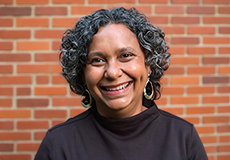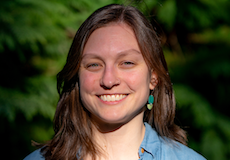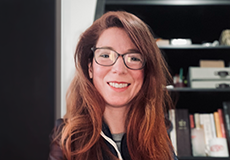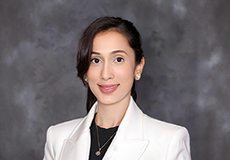
Meet the Civic Science Fellows

(2026-28 list in formation)

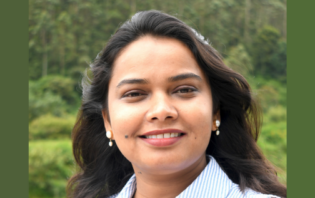
  • Khudejah Ali

    Title

    International Science Council Civic Science Fellow

    Year

    2026

    Project focus: The Fellow will engage directly with scientists, communication professionals, policy practitioners, and staff of multilateral organizations to identify effective approaches for communicating scientific evidence for policy uptake and translate these into practical tools and guidance. 

    Khudejah Ali is a communication scholar whose research examines misinformation, persuasion, and digital behavior, with a focus on health and science communication and public engagement with science. Her work explores the influence of digital media on beliefs and health behaviors. With an interdisciplinary background in communication and mathematics, Khudejah brings quantitative and experimental research expertise to understanding the connections between information, beliefs, and behavior. Her scholarship has appeared in Science Communication, Computers in Human Behavior, and Internet Research. Previously, she served as an Assistant Professor at the Lahore University of Management Sciences (LUMS) in Pakistan, where she taught strategic communication, research methods, and data-driven marketing. Khudejah holds a Ph.D. in communication from the University of Miami, an M.S. in financial mathematics from Florida State University, and a B.S. (honors) in mathematics from LUMS. Her academic experience across Pakistan and the United States informs her sensitivity to the cultural and institutional contexts in which science is communicated. 
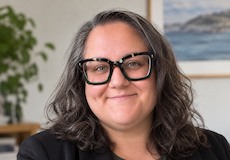
  • Nic Bennett

    Title

    Stony Brook University Alda Center Civic Science Fellow

    Year

    2026

    Project focus: The Fellow will develop practical, evidence-based tools and strategies that help scientists engage with communities more effectively, ethically, and strategically. 

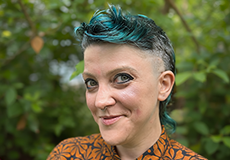
    Nic Bennett (they/them) is a civic science researcher, facilitator, and organizer who builds the relationships and infrastructure that help scientists and communities work together to shape a more democratic future. Nic’s research examines how identity, culture, relationships, and trust shape communication between science and society. They previously worked as a National Science Foundation–funded postdoctoral researcher with the SciComm Identities Project at Michigan State University, where they studied science communication and developed professional learning experiences for scientists. They are also the founder of Science in Solidarity, an organizing hub that helps science workers build community, develop leadership, and take collective action. Nic holds a Ph.D. in advertising and public relations from the University of Texas at Austin. 

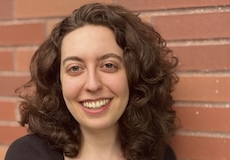
  • Amanda Catherine Borth

    Title

    Association of Science and Technology Centers (ASTC) Civic Science Fellow

    Year

    2026

    Project focus: The Fellow will design, test, and document a new model for science policy development—one that is rooted in responsiveness to public priorities and values and that advances more trusted, impactful, and accountable outcomes for science and technology. 

    Amanda C. Borth is a social science researcher by training and an engagement practitioner in action. By bridging theory, methods, and on-the-ground knowledge, she develops new ways for community, public, stakeholder, and expert perspectives to converge into meaningful guidance for responsible science decision-making. Amanda’s approach draws on her expertise in science and climate change communication, deliberative democracy, and climate intervention technologies. Before joining the Future of Science team at the Association of Science and Technology Centers, Amanda served as an Associate Research Professional at Arizona State University’s Consortium for Science, Policy & Outcomes. She also served as a Graduate Research Assistant at George Mason University’s Center for Climate Change Communication, Project Coordinator at American University’s Institute for Responsible Carbon Removal, and Museum Educator at the Smithsonian National Air and Space Museum, among other positions. Amanda earned her Ph.D. in science communication from George Mason University in 2023 and a B.A. in international studies from American University in Washington, D.C., in 2018. 

  • Brandi Cannon-Force

    Title

    American Museum of Natural History Civic Science Fellow

    Year

    2026

    Project focus: The Fellow will engage intergenerational groups from marginalized communities in the New York City area as co-researchers in an educational digital storytelling project that explores how participants shape science and how science shapes them, culminating in a co-curated, temporary exhibition.

    Brandi Cannon-Force is an interdisciplinary education researcher working at the intersection of identity, culture, and science education. Throughout her doctoral program at Stanford University, she dedicated herself to designing, implementing, and evaluating inclusive STEM (science, technology, engineering, and mathematics) learning experiences across formal and informal settings. She is a former botanist and secondary science educator, and her prior research emphasizes empowering learners of all ages and backgrounds to strengthen, repair, and reimagine their STEM identities through informal, place-based, and interdisciplinary learning.

    Brandi is excited to partner with the American Museum of Natural History to explore how families shape and shift their STEM identities over time as learners and advocates for young learners. Providing space and time for reflection on STEM identity, negotiating what a STEM identity means to learners, and exploring how this identity might intertwine with personal passions and hobbies can be a starting point for repairing previous STEM harm for marginalized learners. Her work bridges research, practice, and community engagement, a synergy that aligns with advancing civic science through innovative, equity-centered programming and that allows those most marginalized in STEM education spaces to rewrite the narratives about who gets to engage with and continue to participate in STEM. Brandi earned her Ph.D. from Stanford University.

    For fun, she is an avid gardener, amateur chocolatier, and mother to her two adorable but devious cats.

  • Holly Lynn Chapman

    Title

    Rice University Baker Institute Civic Science Fellow

    Year

    2026

    Project focus: The Fellow will study the role of scientists in federal policymaking, explore the history of U.S. science policy institutions, and develop scholarship to improve the governance of American research and innovation.

    For over a decade, Holly Chapman has been active in STEM educational initiatives, including co-founding a community education organization providing free training on opioid overdose, pharmacology, harm reduction, policy, and bystander response. She has also received two Research!America Civic Engagement Microgrants for STEM education (2021) and substance use disorder education (2023), supporting primary, secondary, and general education audiences to make complex science accessible and actionable. Her interest in policy led Holly to Washington, D.C., in 2025 as Graduate Archer Policy Fellow, where she interned with Georgetown Law’s O’Neill Institute for National and Global Health Law, Center on Addiction and Public Policy. There, she contributed to policy research on substance use, HIV prevention, and public health. Holly holds a Ph.D. in translational medicine from The University of Texas Medical Branch, an M.S. in behavioral neuroscience from the University of Houston–Clear Lake, and a bachelor’s degree in psychology from The University of Texas at Austin. Her dissertation work studied factors associated with vulnerability to mental health disorders and developed community-based approaches to translate addiction science into practical knowledge.

  • Suzanne Brown Daly

    Title

    Duke University Rural Equity Hub Civic Science Fellow

    Year

    2026

    Project focus: The Fellow will strengthen connections between rural communities and academic partners to advance rural health equity through community engagement, collaborative problem-solving, applied research, and translation of knowledge into practical resources and action.  
     
    Suzanne Daly’s research areas include health disparities, rural health, access to care in rural areas, and equity in rural health and health care. She is passionate about educating others, including students, about the health and health care challenges rural communities face, and how to work together to create solutions to improve health and health care for all of rural residents. Suzanne’s dissertation examined racial disparities in the quality of health care. She has focused her research over the last several years on access to rural health care, specifically the new Rural Emergency Hospital Designation Program. She is excited to return to her longtime hometown of Durham, N.C. as part of a team at Duke University’s Rural Health Equity Hub that is focused on advancing rural health and rural health equity.  
     
    Prior to coming to Duke, Suzanne was Research Assistant Professor at the University of Texas at Arlington’s Center for Rural Health and Nursing. Suzanne earned a Ph.D. in nursing, a Bachelor of Science in Biology, and a Bachelor of Science in Nursing, all from the University of North Carolina at Chapel Hill. 

  • Easton Davis

    Title

    Center for Black Excellence and Culture and Center for Healthy Minds Civic Science Fellow

    Year

    2026

    Project focus: The Fellow will co-develop civically oriented scholarship focused on understanding and improving the flourishing and well-being of Black members of the Greater Madison, Wisconsin, area.

    Easton Davis is a passionate plant lover, a community boxing instructor, and the 2026 Civic Science Fellow at the Center for Black Excellence and Culture in Madison, Wisconsin. As a healing-centered educator, he integrates his passion for movement-based medicine as a tool for nourishment in teaching and facilitating dialogues among Black people. He is a skilled facilitator, trained in intergroup dialogue, and is dedicated to advancing healing-centered education.
    Drawing from Black feminist theories of affect, Easton’s current research explores the somatosensory dimensions of felt sense, recognizing that healing is inherently political, particularly among historically marginalized and oppressed communities of color. Guided by a philosophy of healing justice, Easton’s work advocates for a teaching approach that focuses less on “fixing” people and more on engaged, embodied practices as pathways toward liberation and racial justice through memory, movement, and ritual. Easton earned his Ph.D. and M.S. in cultural foundations of education from Syracuse University. He also holds a certificate of advanced studies in women’s and gender studies and a B.A. in sociology from Randolph-Macon College.

  • Samuelle Delcy

    Title

    Eagleton Science and Politics Program at Rutgers University Civic Science Fellow

    Year

    2026

    Project focus: The Fellow will focus on the intersection of science and policy, training and evaluation of state science and technology policy fellowship programs, and the translation of science and science policy in government and community spaces. 

    Sammie Delcy holds a Ph.D. in pharmacology and a master’s degree in public health from the University of Pennsylvania. Her doctoral research zoomed in on the mechanisms that contribute to learning and memory deficits after traumatic brain injury (TBI) and zoomed out to examine preventive measures for TBI in underrepresented communities. Her interest in underrepresented communities expanded beyond the laboratory into her master’s work, which focused largely on population health and the neighborhood-level factors that drive maternal and adolescent mental health disparities. Throughout her training, Sammie has worked to bridge research and policy by advocating on Capitol Hill for injury prevention policy, writing on Black maternal health for the Philadelphia Inquirer, and creating programming to promote effective science communication. Sammie is dedicated to informing policies that serve communities at risk, grounded in the belief that meaningful science requires collaboration between researchers, government, and the people science serves. 

  • Lisa Marie Eddy

    Title

    George Mason University and University of California, Riverside Science Policy Collaborative Civic Science Fellow

    Year

    2026

    Project focus: The Fellow will support and grow the Science Policy Collaborative’s national network by assessing the needs of U.S. science policy programs, building partnerships to address top-priority deliverables, and connecting programs with one another and with international experts on the use of research evidence in policymaking. 

    Lisa Eddy was Research and Education Coordinator at Virginia Sea Grant, housed at the Virginia Institute of Marine Science at William & Mary, where she managed competitive grant programs, coordinated fellowship and internship pipelines, and built education and outreach initiatives—working both sides of the funding relationship as applicant and administrator. She served on the coordination committee for the Community Engaged Internship, a national Sea Grant program, and is active in the National Conference of State Legislatures’ Science-Policy Fellowship workgroup. Her path to this work is anything but linear: an undergraduate degree in wildlife biology, a stint with the U.S. Fish and Wildlife Service, then law school and a legal career that began in maritime transportation law before she moved into solo practice with a strong pro bono focus—and eventually into federal grants administration and science policy. That mix of field biologist, lawyer, and program-builder shapes how she approaches the systems connecting science to the people who govern with it. A Long Island native, Lisa is happiest outdoors—hiking a trail or waiting out a bite on the water—bringing the same patience to her policy work. 

  • Jeff Feng

    Title

    American Physical Society and American Astronomical Society (APS & AAS) Civic Science Fellow

    Year

    2026

    Project focus: The Fellow will help APS and AAS identify, convene, and coordinate a growing network of professional scientific societies to share knowledge, identify gaps and opportunities, and develop practical frameworks that help scientists engage more meaningfully with communities, policymakers, educators, and publics.

    Jeff Feng is a scholar-activist whose research and teaching focus on the intersections of climate justice and queer liberation, environmental justice, and social movements. They examine the contributions of queer, trans, and Two-Spirit activists to fighting climate injustices and analyze how power, privilege, and marginalization shape climate justice policies and movements. They advance climate justice by researching alongside community-based or tribal-serving organizations, such as the Central Coast Climate Justice Network and the Great Lakes Indian Fish & Wildlife Commission, and by teaching courses—Environmental Social Movements, Environmental Justice, and Queer Feminist Climate Justice—that pair students with environmental justice partners to complete collaborative projects. They have published in PS: Political Science & Politics, Energy Research & Social Science, and AAPI Nexus, and contributed to Edward Elgar’s edited volume A Research Agenda for Human Rights. In public-facing work, they have written about queering land politics for YES! Magazine and curated the online Rhizomatic Project based on interviews with queer environmental activists. Most recently, they were a Postdoctoral Scholar at Northwestern University with the STRONG Manoomin Collective. They received their Ph.D., with a doctoral emphasis in feminist studies, and M.A. in political science from the University of California, Santa Barbara, and their A.B. in environmental sciences and policy from Duke University. 

  • Amanda Finn

    Title

    Boston University Center for Media Innovation & Social Impact Civic Science Fellow

    Year

    2026

    Project focus: The Fellow will construct an evaluative framework for socially impactful science communication, including everything from the clear communication of scientific fact to the negotiation of interpersonal and institutional trust relationships.

    Amanda Finn has a strong background in health science and community service starting from community college through her doctoral studies. As the daughter of a Honduran immigrant and Los Angeles social worker, she proudly carries their legacy of work centering the most vulnerable in society. She completed her B.S. in kinesiology at California State University, Long Beach, and her M..S and Ph.D. in nutrition sciences at the University of Alabama at Birmingham. Amanda’s graduate-level work focused on understanding factors influencing insulin resistance, namely those related to obesity, in humans. She also led local and national science advocacy initiatives, including through Research! America Civic Engagement Microgrants in 2026 and 2026, and served as an organizing member of the Scientist Network for Advancing Policy. Amanda has also served as a volunteer in several academic and community organizations, including the American Society for Nutrition, the Magic City Health Community Advisory Board (Birmingham, Ala.), the National Science and Technology Medals Foundation’s inSTEM mentoring network, and local running and Latin dance groups in Birmingham.

  • Patricia Flores

    Title

    Media Impact Funders Civic Science Fellow

    Year

    2026

    Project focus: The Fellow will turn what she learns about the role of public interest media in supporting science, health and civil society into guidance that funders can use in their own grant making.

    Patricia Flores spent nearly seven years at the Chan Zuckerberg Initiative (CZI), where her role focused on sharing CZI’s science funding, biomedical research, and technology with broader audiences. She led communications strategy across CZI’s multibillion-dollar science portfolio and built a $1.5 million science journalism grant-making portfolio supporting hyperlocal nonprofit newsrooms. She also served as Executive Lead of CZI’s Latino employee resource group. Patricia started her career in tech communications at Apple and Twitter, supporting global product launches and working with leading technology journalists. She also serves on the board of Acción Latina, a nonprofit publisher of California’s oldest bilingual newspaper, where she advises on fundraising and organizational strategy. She holds a bachelor’s degree from Stanford University and an M.B.A. from Northwestern University’s Kellogg School of Management. Raised in San Antonio, Texas, and the proud daughter of immigrants from Peru, Patricia now lives in Chicago after spending a decade in the Bay Area.

  • Melanie Ford

    Title

    Morgridge Institute Science Communication Civic Science Fellow

    Year

    2026

    Project focus: The Fellow will develop and empirically evaluate real-world strategies for public engagement with science that meaningfully connects communities across different ideological or value-based fault lines. 

    Melanie Ford is a cultural anthropologist with training in qualitative research and culturally sensitive education, analysis, and storytelling. As an anthropologist, she has interviewed and worked between journalists, scientists, researchers, government officials, legal professionals, and community leaders to study, translate, and communicate in careful detail the complex and challenging relationships between people and their surroundings. Melanie holds a Ph.D. from Rice University, where she studied the urban politics of land use in post-conflict Guatemala and highlighted local struggles for housing rights and ecological restoration. Her work was funded by the Wenner-Gren Foundation and recognized with Rice University’s Lodieska Stockbridge Vaughn Fellowship for outstanding achievement and promise. Melanie has taught undergraduate-level courses in anthropology, history, Latin American and Chicana/o studies, science and technology studies, and urban planning at ArtCenter College of Design, Rice University, and the University of California, Los Angeles (UCLA).  

  • Chloe Gansen

    Title

    Morgridge Institute Community Engagement Civic Science Fellow

    Year

    2026

    Project focus: The Fellow will develop and empirically evaluate real-world strategies for public engagement with science that meaningfully connects communities across different ideological or value-based fault lines. 

    Chloe Gansen studies the politicization of health and science—including its drivers (both circumstantial and strategic), its effects on the public, and its downstream consequences for society. Her recent research interests include strategies for mitigating the negative effects of politicization and political polarization on health- and science-related perceptions and individuals’ willingness to engage with recommendations, as well as for communicating effectively about public health and science despite these phenomena. Chloe holds a Ph.D. in mass communication from the University of Minnesota and previously worked in applied health communication roles at the National Cancer Institute and Seattle Children’s Hospital.

  • Nazra Izhar

    Title

    Arizona State University Civic Science Fellow

    Year

    2026

    Project focus: The Fellow will conduct applied science communication research focused on community building and public engagement. 

    Nazra Izhar began her career as a reporter and host covering health and agriculture for Doordarshan, India’s national broadcaster. She learned that people’s questions rarely fit neatly into an expert’s prepared answer. What mattered was understanding their concerns and communicating in ways that spoke to their lives. That lesson stayed with Nazra through her work in advertising and nonprofit communication. As the creative head of an education nonprofit, she helped develop curriculum for children from underserved communities. She also conducted community fieldwork in India, speaking with residents and local stakeholders while documenting a public health initiative. Each experience deepened her interest in how information reaches people and whose perspectives shape it. Nazra brought those questions into her research and teaching. She earned her Ph.D. in journalism and mass communication from the University of Kansas. Her research has explored media literacy, institutional trust, health misinformation, climate communication, and civic participation. At the University of Kansas Center for Digital Inclusion, Nazra supports community-engaged research to improve digital access and technology education, especially in underserved communities. Teaching has been another constant in Nazra’s career. She was an assistant professor in India and has taught at the University of Kansas, bringing more than seven years of experience to courses in public relations, media writing, and media and society.

  • Jennifer Elizabeth Jones

    Title

    American Academy of Arts and Sciences Civic Science Fellow

    Year

    2026

    Project focus: The Fellow will support As the Facts Change, an early-stage project on how scientific self-correction is communicated in an era when revision is often misread as inconsistency, bias, or political intent.

    Jennifer E. Jones is an applied researcher who examines how communities, institutions, and evidence shape decisions about shared resources. She holds a Ph.D. in coastal resources management with a focus on governance of vulnerable coastal natural and cultural resources. Jennifer has spent her career building bridges between researchers and the public. As a Fulbright U.S. Scholar in Dublin (2021–2023), she contributed to the CHERISH project, helping develop a community-deliverable coastal-zone assessment that heritage managers can use to respond to climate change. She went on to lead interdisciplinary, engagement-focused research in East Carolina University’s Office of Innovation and Engagement, connecting faculty, government agencies, and regional communities on issues such as rural health, return on investment for higher education, and research governance. Jennifer has edited three volumes with the University Press of Florida on citizen science and heritage, and her scholarship spans public participation, climate impacts on archaeological sites, and heritage management.  

  • Sola Kim

    Title

    Institute for Advanced Study Civic Science Fellow

    Year

    2026

    Project focus: The Fellow will engage in research addressing the social implications of artificial intelligence and AI governance.  

    Sola Kim is a sustainability scientist who investigates whether artificial intelligence (AI) systems can address the environmental justice needs of the environments they are introduced to. With expertise in social-ecological systems, she asks a question about human-nature interactions and infrastructure: when multiple pressures affect a community simultaneously, what fails? Her dissertation research empirically tested this question. In one study, she discovered that when federal agencies use large language models to summarize public comments on environmental rulemaking, the factor causing consistent differential treatment was occupation—comments from lower-status jobs were summarized less accurately and more simply. In another study, she demonstrated that language models reduce the diversity of American climate opinions in ways that standard audits are unlikely to detect. Her ongoing work, supported by the Climate Social Science Network at Brown University, tracks federal guidance on model content as it moves through commercial systems and reaches the public. She holds a Ph.D. in sustainability from Arizona State University’s School of Sustainability. 

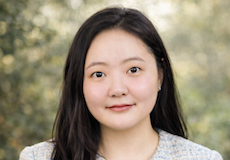
  • Ang Li

    Title

    The Rockefeller University Stavros Niarchos Foundation Institute for Global Infectious Disease Research (SNFiRU) Civic Science Fellow

    Year

    2026

    Project focus: The Fellow will partner with Chinese and Chinese American communities in New York City to co-create and test culturally relevant hepatitis B communication, generating a replicable model for participatory infectious disease engagement. 

    Ang Li is a multilingual storyteller and communications professional whose work sits at the intersection of journalism, cross-cultural communication, and public engagement. Originally from China, she has spent more than seven years creating and shaping stories across languages, cultures, and media platforms, with a particular interest in making complex information accessible, relevant, and meaningful to diverse audiences. Before joining The Rockefeller University, Ang worked as an editor and journalist in Hong Kong, where she led editorial initiatives, produced multimedia stories, interviewed people from diverse backgrounds, and developed content for international audiences. Most recently, she served as an English editor at the Hong Kong Chronicles Institute, translating and editing complex academic and historical material for an English-speaking readership. Her experience spans journalism, multimedia production, translation, research, policy analysis, and stakeholder engagement. Ang holds a Master of Public Administration from Columbia University and an M.A. in journalism from New York University. Fluent in English, Mandarin, and Cantonese, she now brings her cross-cultural perspective and storytelling experience to RockEDU Science Outreach at The Rockefeller University. 

  • Nora Linzer

    Title

    Science Philanthropy Alliance Civic Science Fellow

    Year

    2026

    Project focus: The Fellow will co-create civic science tools, knowledge, and best practices that can inform and inspire funding partnerships and collaborations involving science philanthropy. 

    Nora Linzer earned her Ph.D. in astrophysical sciences at Princeton University. There, she was a member of an international collaboration developing high-resolution simulations of the interstellar medium and studied the transport of high-energy particles and radiation. Before Princeton, she earned a B.S. in physics at the California Institute of Technology and conducted research across a broad range of topics in astrophysics at the Jet Propulsion Laboratory, Duke University, and the Niels Bohr Institute at the University of Copenhagen. Outside of research, she has participated in and organized several outreach programs aimed at involving elementary school students in science. 

  • Savanna May Lyons

    Title

    Virginia Tech Center for Food Systems and Community Transformation and Virginia Cooperative Extension Civic Science Fellow

    Year

    2026

    Project focus: The Fellow will examine Extension’s science policy collaborations with local governments that aim to address food security and food system resilience.

    Savanna Lyons is a scholar-practitioner whose work explores learning, collective action, participatory democracy, and social change. She combines rigorous community-engaged research with over 15 years of experience helping organizations to strengthen community capacity, build relationships across differences, and amplify collective impact. Throughout her career, Savanna has worked to build up people-powered institutions and movements that leverage learning to advance equity and democracy. Her leadership experience includes directing a statewide local food systems coalition, a civic action organization, a youth organizing fellowship program, learning communities for organizers and social entrepreneurs, and a work-based college degree program in food entrepreneurship. Most recently, she spent five years managing a national association of worker-owned cooperatives, supporting leadership development, training, and policy advocacy to advance racial justice and economic democracy. Savanna’s research examines the intersection of learning, leadership, trust, and collective action. Building on earlier scholarship on cooperation in food systems, her current work explores how people learn to build trust across differences, foster trust within diverse coalitions, and use trust as a resource for equity. Savanna holds an Ed.D. in Adult Learning and Leadership from Columbia University, an M.S. in economics and sustainable agriculture from Iowa State University, and a B.S. in environmental science and public policy, cum laude, from Harvard University.

  • Michelle Rose Madlansacay

    Title

    The University of Chicago Community Engaged Research & Impact Civic Science Fellow

    Year

    2026

    Project focus: The Fellow will focus on a social problem that can benefit from academic-community partnership, such as disparities in chronic health outcomes, educational outcomes, violence intervention, food insecurity, or urban planning.

    Michelle Madlansacay is a developmental scientist who applies mixed methodological and interdisciplinary approaches to understanding the role of effective communication in promoting social collaboration and learning. Her own interdisciplinary background in psychology, education, and global studies, together with her experience growing up as the daughter of immigrants from the Philippines, has shaped her belief in leveraging the knowledge and strengths of all people to address ongoing social issues, regardless of cultural or socioeconomic background. Michelle is particularly interested in learning about communication within relationships structured by power differentials, including parents and children, teachers and students, and governments and communities, in hopes of understanding how those in positions of authority can better create spaces for collaborative learning and problem solving. Her graduate work focused on the impacts of early parental and teacher responsiveness on children’s language learning outcomes. Michelle holds a B.S. from Carnegie Mellon University, an Ed.M. from Harvard University, and M.A. and Ph.D. degrees from the University of Chicago.
  • Zari McCullers-Barr

    Title

    Pew Scientific Advancement Civic Science Fellow

    Year

    2026

    Project focus: The Fellow will support the work of the Presidents and Chancellors Council on Public Impact Research to implement a strategic blueprint for more responsive and resilient research institutions, while accelerating game-changing collaborations between higher education leaders and funders at the intersection of higher education, civil society, and the societal benefits of science.

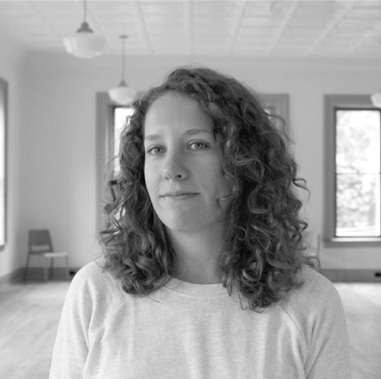
    Zari McCullers-Barr is a biomedical scientist by training. She earned her Ph.D. in biomedical sciences from Penn State College of Medicine, where her neuroscience research examined the biological and behavioral mechanisms underlying binge behaviors. Alongside her scientific training, Zari consistently pursued opportunities to translate research beyond academia and expand science in society. Her experiences span civic science, including fellowships and training programs with the National Science Foundation, Center for Environmental Health, Evidence-to-Impact Collaborative, Weaving Voices for Health and Justice, and numerous scientific member societies. At Penn State, Zari founded several initiatives focused on building community, broadening participation, and creating pathways for students to engage in leadership and science policy. Zari currently volunteers as Conferences Coordinator at Engineers and Scientists Acting Locally (ESAL) and as an intern for the Annual Meeting Steering Committee of the Endocrine Society. Prior to earning her Ph.D., Zari was an NIH-PREP Scholar at Louisiana State University Health Sciences Center in New Orleans and earned her B.S. in biology at Towson University.

    In her additional time, Zari plays numerous musical instruments, including the harp and the marimba.

  • Emily K. McKinley

    Title

    Harvard University Center for Health Communication Civic Science Fellow

    Year

    2026

    Project focus: The Fellow will address pressing questions facing civic science in a social-media-dominated world.

    Emily McKinley is a computational social scientist whose research examines how emerging technologies, including social media and artificial intelligence (AI), influence human attitudes and behaviors, with particular attention to health and prosocial contexts. Alongside this work, she develops computational and AI-assisted methods for social science research that allow persuasion, health communication, and misinformation to be studied at scale. Emily earned her Ph.D. and M.A. in communication, with a designated emphasis in computational social science, from the University of California, Davis, and her B.A. in communication from Utah State University. Before entering academia, she worked in consumer research and customer experience at Cotopaxi, Maverik, and Gigi Pip.

  • Olivia Mills

    Title

    American Brain Coalition Civic Science Fellow

    Year

    2026

    Project focus: The Fellow will further refine the American Brain Coalition’s Community Engagement Platform by deepening the ability to integrate lived experience into research, support community-driven advocacy, and empower organizations to shape and benefit from advances in brain science and technology while contributing to the next generation of change-makers.

    Drawing on her background in patient engagement and advocacy, Olivia Mills seeks to strengthen the American Brain Coalition’s Community Engagement Platform through collaboration, education, and member involvement. Her work focuses on exploring how the Coalition’s community engagement resources can be grounded in basic science while addressing the varying needs of advocates, people with lived experience, researchers, and developers. She is particularly interested in supporting the translation of vital brain and nervous system research concepts into actionable and accessible materials that foster stronger engagement across the brain health ecosystem. Olivia holds a B.A. in public health and an M.S. in health promotion management from American University.

  • Paola Moreno-Roman

    Title

    American Association for the Advancement of Science – Dialogue on Science, Ethics, and Religion (AAAS-DoSER) Civic Science Fellow

    Year

    2026

    Project focus: The Fellow will develop and carry out a project that supports the work of the Dialogue on Science, Ethics, and Religion program in advancing dialogue, mutual understanding, and collaborative engagement between scientific and religious communities on today’s most pressing issues.

    Originally from Peru, Paola Moreno-Roman earned her Ph.D. in cell and molecular biology from Stanford University before bringing her scientific training to community-centered science education and engagement. Her work focuses on making science more accessible, relevant, and responsive to the communities it serves. At Foldscope Instruments, where she previously worked, Paola led science education and outreach initiatives that introduced hands-on microscopy to classrooms and communities worldwide through a high-quality, low-cost paper microscope. She is also the founder of Yachaq Warmi – Mujeres en STEM, an initiative that supports Peruvian girls and women in STEM through mentorship, leadership development, and storytelling grounded in both Western scientific training and traditional and Indigenous knowledge systems. Paola also serves on the board of the Amazon Center for Environmental Education and Research, where she advises on science and education programming in the Peruvian Amazon. Throughout her career, Paola has built bridges between scientific institutions and the public through grassroots STEM education, dialogue with faith communities, and international engagement. As a Quechua Peruvian scientist and practicing Roman Catholic, she offers a perspective shaped by science, faith, and community, and is dedicated to fostering connection, curiosity, and the common good.

  • Victoria Oldemburgo de Mello

    Title

    New York University Center for Conflict and Collaboration Civic Science Fellow

    Year

    2026

    Project focus: The Fellow will examine whether people self-select into politically aligned artificial intelligence (AI) chatbots, and whether these systems, by surfacing different information to different users, are creating a new kind of echo chamber that threatens the shared factual foundation democracy depends on.

    Victoria Oldemburgo de Mello holds a Ph.D. in social psychology from the University of Toronto and a B.Sc. from the Federal University of Santa Catarina in Brazil. At Toronto, she was a doctoral fellow at the Schwartz Reisman Institute for Technology and Society and was supported by the Social Sciences and Humanities Research Council of Canada. She writes about her research for general audiences on her Substack.

  • Jessica Pintado

    Title

    The Rockefeller University Center for Clinical and Translational Science and Clinical Directors Network Civic Science Fellow

    Year

    2026

    Project focus: The Fellow will align principles of civic science with community-engaged research practices as related to studies of emerging infectious disease conducted as “full spectrum translational research.”

    Jessica Pintado is a biomedical scientist and scientific communicator whose work centers on infectious diseases, translational research, and equitable public health impact. She holds a Ph.D. in microbiology and immunology from the Icahn School of Medicine at Mount Sinai, where her research examined immune responses to the National Institutes of Health’s live-attenuated tetravalent dengue vaccine, TV003, and the challenges of translating vaccine science into safe, effective, and accessible public health interventions. Jessica previously led clinical and survey data analyses at Columbia University for studies of pediatric Long COVID, SARS-CoV-2 immunology, and immune sequelae. She has also worked in life sciences consulting and intellectual property, translating complex clinical, scientific, and technical evidence into clear, actionable materials for varied audiences. Across her work, she is committed to approaching communities and frontline care teams as essential experts and collaborators in the research process.

  • Alejandra Ruiz León

    Title

    Institute for Advanced Study Civic Science Fellow

    Year

    2026

    Project focus: The Fellow will build and run the digital platform for The Public’s Science initiative—curating and editing its content, supporting the ANNALS special issue and final policy report, synthesizing relevant scholarship, and cultivating the community of practice around a public-centered vision of American research policy.

    A science communicator and historian of science with over a decade of experience, Alejandra Ruiz León bridges research, public engagement, and institutional communication across diverse platforms, from science museums and traditional media to social media and community events. Trained in biochemistry and shaped by the history and sociology of science, Alejandra’s research explores how knowledge circulates in different forms and contexts. She has led large-scale public engagement initiatives, including Piura con Ciencia, a children’s science event in northern Peru; served as a science writer for UPMC (University of Pittsburgh Medical Center); and built an engaged audience through her social media presence (@mitocondria.cc), where she communicates about science and its history. Her academic research focuses on the history of science museums, particularly institutional transformations and closures. Her dissertation, “Caged Knowledge,” examined the institutional landscape surrounding the closure of South America’s first interactive science museum. Her background, navigating scientific training across Peru, Spain, and the United States, deeply informs her perspective on how science communication operates across cultures and contexts.

  • Mariela Santoz-Muñiz

    Title

    Climate Central Spanish Language Engagement Civic Science Fellow

    Year

    2026

    Project focus: The Fellow will engage deeply with journalists, meteorologists, social media content creators, scientists, and organizations communicating with Hispanic/Latino communities, to help them drive public understanding about climate change.    

    Based in Puerto Rico, Mariela Santoz-Muñiz has worked in various journalism roles, often with a focus on Latine communities in the United States and Puerto Rico. Before joining Climate Central, she taught a journalism course to undergraduate students at the Pontifical Catholic University of Puerto Rico. Mariela also worked for six and a half years as the Collaborative Journalism database and newsletter coordinator at the Center for Cooperative Media at Montclair State University. As a freelance journalist, she has been chosen for several fellowships, and her work has been published by NBC News Latino, the Open Notebook, Prism, palabra and more. Mariela has a master’s degree from Boston University in international relations and international communications and a bachelor’s degree from Ana G. Méndez University, Gurabo Campus, in socio-humanistic studies. In addition, she is currently a master’s degree student in information science at the University of Puerto Rico, Rio Piedras Campus.

  • Victoria Schneider

    Title

    Research!America Civic Science Fellow

    Year

    2026

    Project focus: The Fellow will work with early career scientists, science creators/influencers, science journal editors and others to develop creative digital strategies for connecting Gen Z to trustworthy, compelling scientific content.

    A microbiologist and infectious disease scientist by training, Victoria Schneider has a passion for global and public health and the ways public engagement, society, and policy impact these fields.  She received her doctorate in the biological sciences at The Rockefeller University, where her thesis work explored a novel aspect of genetic regulation in the parasitic species responsible for malaria. While completing her Ph.D., she was an active member and leader of the Science Education and Policy Association in New York City, a founding member organization of the National Science Policy Network. After completing her graduate work, she joined Research!America first as a Science Policy Fellow and eventually as the Senior Manager of its Global Health Research and Development Advocacy Program. She then went on to serve as the Senior Research Program Manager for the Precision Health Initiative—a transdisciplinary, population health–focused research initiative at the University of Virginia. Victoria is incredibly excited to return to Research!America and lead this project exploring ways to create online content about medical research and science that is accessible and engaging to members of Gen Z. She lives in Northern Virginia with her wife and their two cats.

  • Ana Stringer

    Title

    Open Environmental Data Project Civic Science Fellow

    Year

    2026

    Project focus: The Fellow will explore how small, locally governed AI models can support community data sovereignty and environmental decision-making — through a hands-on demonstration build, public documentation, and participatory governance guidance. 

    Ana Stringer is an Arctic researcher who grew up on the shores of the Arctic Ocean in Utqiaġvik, Alaska, a hub for Arctic research. Her experiences there shaped her interest in how environmental data are produced, governed, and made useful to the communities they concern. Her research combines computational and qualitative approaches to understand environmental change across Arctic communities. She has used high-resolution satellite imagery and deep learning to map landfast sea ice—a critical platform for safe travel, hunting, and food access—across more than 60 Arctic coastal communities. In Utqiaġvik, she has conducted community-based and ethnographic research examining how changing weather and landscape conditions shape where, when, and how people travel across coastal and inland environments. Her master’s research examined bowhead whaling in Kivalina, Alaska, using qualitative methods.  

  • Michael Tineo

    Title

    Columbia University Center for Justice Civic Science Fellow

    Year

    2026

    Project focus: The Fellow will build bridges between researchers and communities impacted by violence to design rigorous evaluations of community violence intervention efficacy that are rooted in the needs and goals of community members.

    Michael Tineo is a justice advocate, entrepreneur, educator, and public speaker committed to creating opportunities for justice-impacted and underserved communities. With more than 15 years of experience working with justice-impacted populations, Michael brings a unique perspective shaped by lived experience, academic achievement, and professional leadership. Michael holds a master’s degree in professional studies, a bachelor’s degree in behavioral science, and an associate of science degree, graduating valedictorian and summa cum laude across his academic career. Previously, Michael served as an assistant academic advisor with Hudson Link for Higher Education in Prison, helping incarcerated students access higher education and coordinating academic programs at Sing Sing Correctional Facility. He also served for years as a religious leader within the Muslim congregation at Sing Sing. Michael is also an experienced public speaker who has spent more than a decade advocating for criminal justice reform, education, rehabilitation, and successful reentry. Michael has been featured in the documentary Beyond and continues to participate in screenings and discussions designed to challenge perceptions of incarceration and highlight pathways toward transformation, leadership, and redemption.

  • Breana Turner

    Title

    AcademyHealth Civic Science Fellow

    Year

    2026

    Project focus: The Fellow will build an Evidence Creator Pipeline by identifying, partnering with, and supporting the social media creators and community communicators who can carry health policy evidence into the diverse audiences and civic conversations that traditional scientific institutions struggle to reach.

    Breana Turner is a translational scientist, public health researcher, science communicator, and women’s health advocate whose work centers health equity, community-engaged research, and translating science into accessible and actionable information. Her scholarship examines Black women’s lived experiences of health and healthcare, with particular attention to how social expectations, structural inequities, and cultural experiences shape health and wellness. A researcher, educator, speaker, and science communicator, Breana has built a career at the intersection of women’s health, public engagement, health literacy, and civic science. She is the founder of Becoming HealthyHer, a health literacy initiative translating women’s health research into practical tools that support women in advocating for their health. In 2025, she received a Research!America Public Engagement Content Award, which supported the development and public mobilization of Becoming HealthyHer. She has also built a growing digital presence communicating science and public health to broader audiences and has been featured by TheGrio and local news outlets as a subject matter expert on women’s health and public health. Her TEDx talk, “Questions Are the Answer”, explores the importance of reciprocal relationships between scientists and communities and the role of dialogue, curiosity, and questions in making science more relevant to the people it serves. Breana is also a co-author of Our Doctoral Journey, Volume II, a 2025 Loudoun County Trailblazer Hall of Fame inductee, and a recipient of the George Mason University Black Alumni Chapter’s 40 Under 40 recognition. She earned her Ph.D. and M.P.H. from Virginia Tech and B.S. from George Mason University. Across her work, Breana believes deeply in “reaching back” to empower the next generation of women and girls.

  • Krithika Venkataraman

    Title

    Human Cell Atlas Civic Science Fellow

    Year

    2026

    Project focus: The Human Cell Atlas (HCA) Civic Science Fellow will lead a project exploring how we can go beyond knowledge outputs like publications and datasets to drive systems change, in order to recognize, articulate, and reward the community and infrastructure work that is foundational to global scale scientific collaborations.

    Krithika Venkataraman is a scientist, storyteller, and community-builder. As a civic science practitioner, her work draws on data, narrative, and intentional design from different disciplines to make visible the full value scientific ecosystems create—from the scientific rigor of discovery to the infrastructural and human work that enables it. Previously, she was the inaugural Civic Science Associate at RockEDU Science Outreach at The Rockefeller University. With support from the Rita Allen Foundation, she designed a platform offering curated scaffolding for laboratories to function more inclusively. Krithika was also a scientific program officer at the Simons Foundation, leading grant making and convening in large-scale neuroscience collaborations and fellowship initiatives for researchers across career stages. She received a B.A. in biochemistry and a minor in neuroscience from Smith College. Her Ph.D. from The Rockefeller University combined behavior, genetics, and evolutionary biology to understand how disease-vector mosquitoes adapt their reproductive strategies to climate fluctuations. Krithika was born in India and spent her childhood between Belgium and India, before living in the United States and the United Kingdom. Her experiences shape her curiosity about how communities and cultures share knowledge and build trust to drive innovation. Outside of work, she enjoys pottery, yoga, photography, and audiobooks.

  • Jillian Walton

    Title

    West Virginia Science and Technology Policy Initiative Civic Science Fellow

    Year

    2026

    Project focus: The Fellow will select a topic area relevant to West Virginia and build out a policymaker guide that contains the science and technical information related to the issue and in-depth analysis of the policies enacted in similar states, informed by local communities, workers on the ground, and other stakeholders.

    Jillian Walton is a microbiologist by training, specializing in bioremediation, microbial ecology, and microbial engineering. She received her Ph.D. in microbiology from the University of Tennessee, where she researched natural attenuation of hydrocarbon pollutants in marine ecosystems. During her studies, she was actively involved in her local community and founded a citizen science program dedicated to educating residents about soil and water quality. She is also a seasoned advocate for science, taking part in Hill Days, science policy and advocacy trainings, and a public policy internship with the American Society for Microbiology (ASM). Her civic science and advocacy efforts led her to be awarded the Howard Hughes Medical Institute Gilliam Fellowship and the ASM Brad Fenwick Fellowship for the Advancement of Civic Science.

  • Keegan Wesley

    Title

    The University of Alabama and The University of Utah Civic Science Fellow

    Year

    2026

    Project focus: The Fellow will work to better understand the gaps in pathways of professionalization for science communication and public engagement. 

    Keegan Wesley is a science and society leader with more than 15 years of experience directing multistakeholder initiatives that integrate scientific evidence into policy, research, and funding decisions. She specializes in bridge-building, connecting siloed sectors and disciplines to strengthen the infrastructure (interfaces, networks, policies, and expertise) that sustains a robust scientific enterprise. Her work has informed how research is supported, governed, communicated, and applied to address complex societal challenges. Most recently, Keegan directed the Science Public Engagement Partnership (SciPEP), a five-year collaboration between the U.S. Department of Energy and The Kavli Foundation that helped establish the field and practice of basic science communication. Earlier, at the National Academies of Sciences, Engineering, and Medicine, she led more than 50 advisory studies and workshops and shaped consensus guidance across environmental and public health issues adopted by government agencies, nonprofits, and universities in the United States and abroad. Keegan is an elected Fellow of the American Association for the Advancement of Science, recognized for her national leadership connecting basic science and society. She holds an M.S. in public health and a Ph.D. in environmental science and engineering from University of North Carolina at Chapel Hill’s Gillings School of Global Public Health. Outside of work, Keegan fosters kittens for her local animal shelter, raises funds to expand native biodiversity at her local botanical garden, and spends weekends cheering on her three boys at their soccer matches. Across all of it, she is guided by the same goal: leaving people and the planet better than she found them. 

  • Lucy Whitmore

    Title

    Annenberg Public Policy Center of the University of Pennsylvania Civic Science Fellow

    Year

    2026

    Project focus: The Fellow will develop civically oriented research projects focused on topics like climate and health communication, civic engagement and climate action, and social connection and resilience.

    Lucy Whitmore (she/her) is particularly interested in using mixed-methods and interdisciplinary approaches to support well-being in the face of the climate crisis, especially among young people. Her program of research focuses on how real-world features of people’s environments (e.g., social networks/connections, surrounding natural and built environments) influence behavior, decision-making, and well-being. Prior to joining the lab, Lucy received a B.S. in cognitive science from the University of California, Berkeley, and completed her Ph.D. in psychology at the University of Oregon.

  • Kristine Willis

    Title

    American Institute of Physics Civic Science Fellow

    Year

    2026

    Project focus: The Fellow will co-develop an initiative to explore how scientific communities identify, support, and advance ideas with the potential to transform the physical sciences.     

    Having both received and administered awards from the National Institutes of Health, Kristine Willis has a unique perspective on science funding. During more than a decade as a program director, she represented the agency on several high-profile initiatives to improve rigor and reproducibility in science, oversaw an innovative alternative to traditional project-based funding that supports the full program of research in the laboratory of early-career researchers, and managed roughly $30 million annually in studies focused on DNA damage and cancer metabolism. She also applied her skills as a systems biologist and data scientist to analyze the grant-making process, authoring papers that show the influence of topic choice on the competition for awards and that the NIH portfolio has been slowly but continuously trending toward more clinical and translational science for the past 30 years. Her most recent work describes an approach to predicting transformational breakthroughs in biomedical science. As the founder of the nonprofit Woodley Park Institute, she seeks to translate her experience and insights into evidence-based strategies for improving how scientific research is supported and evaluated, so that more people can enjoy its benefits.

Featured Stories

See all