The Cost of (Not) Belonging
April 22, 2026
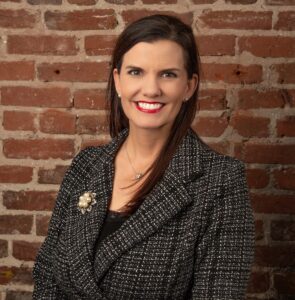
By philanthropic strategist and collaborator Kristen Cambell
In the wake of the 2024 election, I moderated a panel where an audience member asked: “If I gave you a million dollars and told you to make the most impact possible on combating mis- and disinformation, where would you put it?” Responses included things like fact-checking, algorithmic transparency policy, and education—all good, technical answers, and all necessary pieces of the puzzle. My response: “belonging.” I got a lot of stares.
I had recently spent time trying to understand why facts don’t change people’s minds—and in some cases even make our beliefs more rigid. This led me to research from psychologists, philosophers, social scientists, and others. At the risk of oversimplification, it led me to this conclusion: facts often fail to change our minds because we have a basic human need to belong. If “our group” believes something, then we believe it—because that’s what we do.
We still have choice and agency. But we are constantly (consciously or unconsciously) weighing the costs associated with holding certain beliefs, whether the costs are social, financial, moral, reputational, or otherwise. For better or worse, some costs are simply too high to pay—and that can include the cost of not belonging.
Helping people develop multiple, overlapping identities—so they feel belonging in more contexts—could be one overlooked solution to the information disorder crisis. That’s not a rejection of fact-checking, education, or policy reform. Those efforts matter deeply. But without addressing the underlying social systems of belonging that shape how people form and hold beliefs, those downstream interventions will always be working uphill.
The implications extend beyond information. Democracies are more resilient when people experience multiple, overlapping homes in public life—when disagreement does not threaten their sense of belonging in the larger civic community.
That is a science-informed answer to a question that is not—at least on the surface—a science question. It is one I would not have come to without exposure to the idea of civic science, and one many people in that room might not have considered otherwise.
In my work on issues of American democracy, social cohesion, and civil society, a pivotal opportunity for civic science connection came when I led, for 18 months, the Democracy Futures Project at PACE (Philanthropy for Active Civic Engagement). With a group that crossed sectors, we explored what American democracy might look like in the year 2050 and how funders could become more “future ready.”
Jayatri Das, a Civic Science Fellow host partner, spoke about ways bioscience and medical innovation could reshape democratic life—not an intuitive connection to make. She described how gene editing is shifting demographic possibilities and raising profound questions about society’s concepts of morality. She pointed to potential benefits like the eradication of disease and disabilities, and enhanced brain function—but also risks such as eugenics or the use of mind-reading technologies by law enforcement.
These possibilities provoked fascinating questions about what democracy will need from us as these shifts occur: What kinds of public policy and regulatory frameworks will be required? What kinds of interventions should—or should not—be allowed, and how does that relate to free will and individual choice? What kind of international cooperation might be needed to balance innovation with the protection of human rights?
And on any of these questions…who gets to decide?
At one point in that process, I realized something important: we weren’t just mapping future trends. We were uncovering the deeper conditions that would shape which democratic futures are even possible. Questions about science on one hand and about belonging, identity, and meaning on the other aren’t side conversations—they are design parameters of the democratic system itself.
It can feel like a luxury to consider things that feel abstract when we are trying to combat urgent challenges with significant real-time consequences. It can feel like bringing a PowerPoint to a culture war.
But exploring the wicked problems shaping our future is not just about what we will do together. It is also about how we learn to think together and how we build belonging. It is as much about the process—and who is at the table—as it is about the outcome. To me, that is civic science.
Kristen Cambell
Senior Fellow, Philanthropy for Active Civic Engagement
Chief Partnerships Officer, Christchurch Call Foundation