The People and Connections Science Needs Now
November 24, 2026
By Shannon Dosemagen
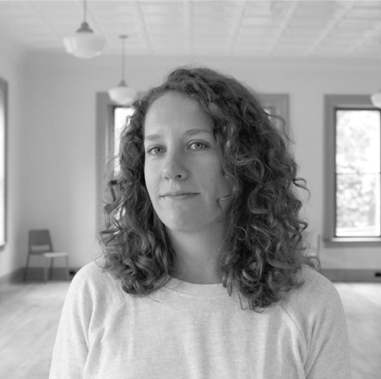
My mother was a social worker. For years she worked third shift on a mobile crisis unit. That meant arriving at someone’s door at 2 a.m., with almost no information, on a hard night of their life.
She once told me that as she stepped into a scene, every sense would light up. What did it smell like? Were there piles of clothes or dishes? Was a TV or radio on? A well-groomed Doberman on a tattered green velour couch? She watched for physical twitches, the small movements of a hand or a face that said more than words. Anything that could help her make sense of what wasn’t yet known.
The data was all around her. Her job was to perceive it.
Throughout my own career, I come back to that lesson, because I think science has a version of the same problem that we are constantly trying to solve.
Right now, many conversations about science in the U.S. come back to one story. In 1945, Vannevar Bush wrote Science, the Endless Frontier, and built the case for public funding of research. Eighty years later, we’re watching that compact come apart—grants frozen, agencies cut, scientists leaving. So we ask what we can save, what parallel or commons-based institutions we should build, and who steps in when government steps back. Those are urgent questions, and many of you in this room are answering them every day.
But it’s worth remembering that Bush’s case leaned on curiosity. Progress, he argued, comes from people free to explore the unknown on subjects of their own choosing. That promise was real. It was also offered to very few people.
This summer, in a Boston Review forum called “How to Save Science,” the political theorist Zeynep Pamuk argued that science must become more answerable to the public. For instance, she proposes panels of randomly selected citizens who would weigh competing research agendas and recommend funding priorities. I find that compelling. But even the best proposals to democratize science still center on who controls the money. I want to start a step earlier.
We usually describe the crisis in science as a crisis of funding. I want to suggest it’s also a crisis of perception: who gets to notice, and what we still let ourselves imagine.
My examples come from environmental and community science, but so much of science starts the same way: someone notices something that doesn’t fit.
So, here’s where I learned to pay attention.
In 2009, I was working with fenceline communities, neighborhoods that sit right up against refineries and chemical plants in Louisiana’s infamous petrochemical corridor. People there, unfortunately, are often the first sensors. They smell a release before a monitor logs it, if there’s a monitor to log it at all. They notice the cough in their kids, the patterns of asthma, the film of pet coke dust on the windowsill or covering their cars. A sweet, gasoline-like smell can mean benzene, a known carcinogen.
That’s where I learned the meaning of socially situated data. The point isn’t to get as close to the polluting facility as possible to capture a sample. It’s to sample the places that carry meaning: the local school, the church (in the South), the playground. Data like that isn’t less rigorous. It starts where the harm is felt, and it answers the questions people are actually asking.
Then, in the spring of 2010, the Deepwater Horizon rig exploded in the Gulf of Mexico. Oil spread for months. People along the coast could see it and smell it. But the official picture was slow, partial, and hard for them to reach.
So people made their own picture. Residents, fisherpeople, public health students, neighbors, a coastal erosion specialist from North Carolina, a geospatial expert from California. We tied cameras to helium balloons and kites and sent them up over the Gulf.
A few weeks after the spill, I was sitting in a boat, a little woozy from the burning oil around us, watching a red balloon climb a couple thousand feet. A wind current caught it, and then it was gone. I could still feel the tug of the string, but lazily. The balloon would stay up for thirty minutes, so we’d sit and wait, watching the GPS tracker to make sure it was still attached.
We’d rushed out early that morning, and I’d forgotten one key piece of equipment. You might laugh: it was the head of a Q-tip, which we used with a rubber band to keep the camera’s shutter pressed. Looking around, someone found a small fish bone on the floor of the boat. It worked.
It’s a small, almost funny detail. It’s also the whole point. People used what was at hand to see their own place from a new angle. From the boat, I could see clay-colored clusters of oil bumping up against us. When we brought the camera back down and stitched that day’s images of the Chandeleur Islands together, they told a whole different story—rainbow bands of oil covering sensitive lemon shark breeding areas and fishing grounds.
The question is what happens next and how that knowledge moves.
Noticing is only the first step. A resident’s observation doesn’t become evidence on its own, and evidence doesn’t become a decision on its own. Somebody has to carry it.
Those people rarely have a clear title. They translate a neighbor’s story into something a regulator can act on. They explain to a scientist why a community’s experience differs from what the data seems to say. They know which meeting to show up to.
Picture someone who goes to every Army Corps of Engineers permitting meeting. Who spends hours scraping public datasets. Who works alongside communities to understand how the wetlands are changing, files suits, answers journalists’ questions, and connects with scientists to design studies that answer emerging questions about land use and proximity.
This is the work that holds everything together, and it’s the work our institutions are least built to see. It doesn’t fit one discipline. It rarely produces a paper or a product. On a budget, it looks like overhead.
I know this because I’ve done it, and because this civic science community made room for me to keep doing it. When I started the Open Environmental Data Project, the Civic Science Fellows program gave me time and permission to work across lines. It connected me to scientists, practitioners, and institutions immersed in similar questions in very different scientific spaces.
And over time, it let that work grow. We dealt with urgent data problems while leaving room to imagine the environmental data infrastructure we actually want. We articulated visions of knowledge commons while also saving federal datasets. We advocated for a vision of openness that can create a more just relationship to knowledge, while staying practical about how communities experience openness, which isn’t always positive.
What mattered most wasn’t the project funding. It was the bridge—a network of funding partners, hosts, and fellows that treated the connecting work itself as worth investing in.
In early October, I was in Kathmandu for the Gathering for Open Science Hardware, sitting on a hill outside the city. Below us was the Bagmati River, badly polluted. The hillside around us was visibly eroding, and end-of-monsoon rain was pounding down.
My small group, local students, an engineer, a molecular biologist, and me, were in a session on climate change impacts in Nepal. We were all looking at the same landscape and seeing different things. The engineer watched how the rain diverted across the park and down into the valley. The biologist wondered what synthetic materials could do to stabilize the eroding hill. The students told us how the surrounding community had organized itself to stop the old cement plant from reopening.
The session lead asked us to imagine this place twenty years from now. Our answers bounced off each other. What if that cement factory became a community science hub? What if it made bio-cement to hold the hill in place, and employed people from the surrounding community? What if redirecting the water, together with replanting native vegetation along the slope, helped restore habitat so pollinators came back?
In the moment, an exercise like that can feel a little frivolous. It isn’t. It’s practice. When resources are limited, the ability to see a place differently isn’t a luxury. It’s where solutions start. Our aerial maps in the Gulf were born under constraint. So was that conversation on the hill. And right now, so is much of American science.
So here is my provocation. Alongside saving what we can, we need to invest in the capacity to perceive and imagine. That capacity lives in people, and in the connections between them. Everyone in this room has a hand in it.
- If you fund this work, fund people and relationships, not only deliverables, and treat the connecting work as critical infrastructure.
- If you host fellows, protect their unstructured time, and let what they notice change your institution, even when it’s inconvenient.
- If you are a fellow, trust your senses as a source of knowledge, and go to the places themselves—in the rain, by the river, at the fenceline.
- For all of us, make room to imagine together, the way we did on that hill.
My mom walked into rooms she didn’t yet understand and used everything she had to see what was really there. That’s what civic science asks of all of us now.
How can we strengthen the people and pathways that connect science to public life? Or, more simply, where in your own work could you make more room for noticing?
Shannon Dosemagen is the founder of the Open Environmental Data Project, where she was a Civic Science Fellow and host partner. She also cofounded Public Lab and the Open Science Hardware Foundation. This article is drawn from her remarks at the Civic Science Regional Gathering in New York City, October 28, 2026.